
News Release
Media
Fuel Cell Technologies and the Role of Interconnect Plates in Clean Energy
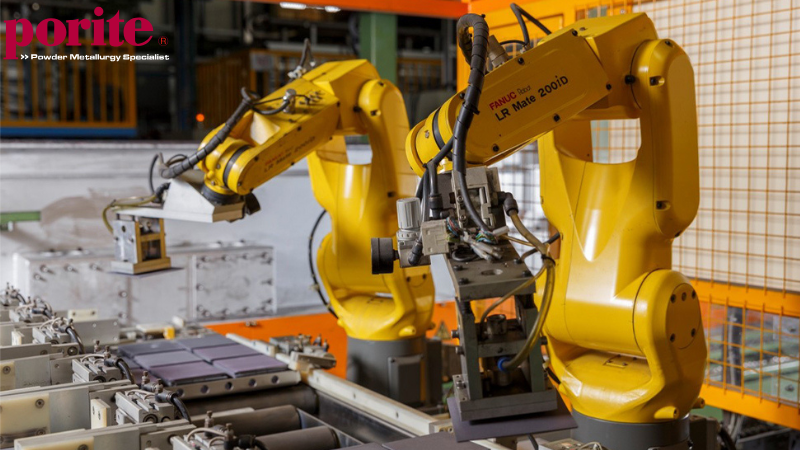
As the global demand for clean and efficient energy solutions grows, fuel cell technologies have emerged as a promising alternative to conventional combustion-based power sources. Among various types of fuel cells, the Solid Oxide Fuel Cell (SOFC) and Solid Oxide Electrolysis Cell (SOEC) are attracting significant attention due to their high efficiency, fuel flexibility, and scalability in both stationary and mobile applications.
Understanding Fuel Cells: Clean Power Through Electrochemical Reactions
Fuel cells convert chemical energy directly into electricity through an electrochemical reaction, typically between hydrogen and oxygen. Unlike traditional combustion engines, fuel cells do not involve burning fuel, which significantly reduces emissions. Instead, the process yields electricity, water, and heat—with zero CO₂ emissions when using green hydrogen as fuel.
SOFCs are solid-state devices operating at high temperatures (typically 600–1000°C), making them suitable for combined heat and power (CHP) systems. They can use a variety of fuels, including hydrogen, natural gas, and biogas, offering excellent efficiency even with internal fuel reforming. Meanwhile, SOECs operate in reverse, using electricity and heat to electrolyze steam into hydrogen, playing a key role in hydrogen production and storage strategies.
Core Component: Interconnect Plates in Fuel Cells
At the heart of every SOFC and SOEC stack lies the interconnect plate. These metallic plates act as both electrical conductors and gas separators between individual cells in the stack. By channeling fuel and air to the electrodes and conducting the resulting electrons to the external circuit, interconnect plates are essential to the performance and durability of the entire system.
Fuel cell stacks are made by alternately layering cells and interconnect plates into a repeating structure. This design enables the modular scalability of fuel cell systems, allowing applications ranging from residential systems to large-scale industrial energy solutions.
Porite Taiwan’s Advanced Manufacturing for Interconnect Plates
To meet the growing global demand for high-performance fuel cells, Porite Taiwan has developed a proprietary manufacturing process for interconnect plates that ensures precision, conductivity, corrosion resistance, and mechanical strength.
1. Powder Metallurgy Forming
Porite Taiwan uses traditional powder metallurgy techniques to form the complex shape of the interconnect plate. This method allows for high dimensional accuracy and design flexibility, which are critical for ensuring uniform gas distribution and electrical conductivity across the fuel cell stack.
2. High-Temperature Sintering
The green part is then sintered at high temperatures to achieve the required mechanical strength and density. The sintering step optimizes microstructure for conductivity and minimizes gas leakage risk.
3. Plasma Spray Coating
To further enhance surface properties, Porite Taiwan applies a plasma spray coating to the interconnect plates. This protective layer improves oxidation resistance at elevated operating temperatures and ensures long-term chemical stability in the harsh fuel cell environment.
Applications and the Future of Clean Energy
Fuel cells are being adopted in various sectors, including:
- Power generation: Distributed energy systems, microgrids, and backup power solutions.
- Transportation: Hydrogen-powered vehicles such as buses, trucks, and trains.
- Industrial decarbonization: Using SOECs for green hydrogen production to replace fossil fuels in industrial processes.
As industries seek to reduce carbon emissions and enhance energy efficiency, SOFC and SOEC systems are expected to play a central role in the global energy transition. High-quality interconnect plates, like those manufactured by Porite Taiwan, are the backbone of this technological evolution.
Conclusion
Fuel cell technologies are paving the way toward a cleaner, more sustainable energy future. With advanced manufacturing capabilities and a commitment to material innovation, Porite Taiwan continues to support the energy industry by delivering high-performance interconnect plates for SOFC and SOEC systems. These components are essential for enabling scalable and durable fuel cell stacks, helping industries worldwide embrace next-generation clean energy solutions.
Porite Taiwan – Advancing Powder Metallurgy for Tomorrow’s Energy Solutions.